


100 mm SWIR lens, 900-1700 nm, 4/3", F2.1, C-mount
LS-SWL-0255
- Focal length 100 mm
- Mount C-mount
- Sensor 4/3"
$2,100.00
Ships in 3-4 weeks
Lenses
Germanium LWIR lenses for 8-14 um thermal cameras, SWIR lenses for 900-1700 nm InGaAs sensors, and UV lenses for 250-380 nm imaging. Check the detector format, pixel pitch and mount.
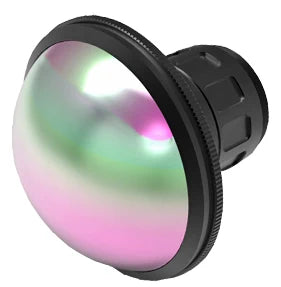
LS-SWL-0255
$2,100.00
Ships in 3-4 weeks
LS-SWL-0257
$2,100.00
Ships in 3-4 weeks
LS-SWL-0256
$2,100.00
Ships in 3-4 weeks
LS-SWL-0247
$945.00
Ships in 3-4 weeks
LS-SWL-0249
$400.00
Ships in 3-4 weeks
LS-SWL-0252
$400.00
Ships in 3-4 weeks
LS-SWL-0251
$400.00
Ships in 3-4 weeks
LS-SWL-0250
$400.00
Ships in 3-4 weeks
LS-SWL-0244
$945.00
Ships in 3-4 weeks
LS-SWL-0245
$945.00
Ships in 3-4 weeks
LS-SWL-0246
$945.00
Ships in 3-4 weeks
LS-SWL-0242
$660.00
Ships in 3-4 weeks
LS-SWL-0243
$660.00
Ships in 3-4 weeks
LS-SWL-0237
$6,635.00Quote
Ships in 3-4 weeks
LS-SWL-0238
$9,450.00Quote
Ships in 3-4 weeks
LS-SWL-0240
$10,000.00Quote
Ships in 3-4 weeks
LS-SWL-0235
$6,635.00Quote
Ships in 3-4 weeks
LS-SWL-0221
$970.00
Ships in 3-4 weeks
LS-SWL-0236
$6,635.00Quote
Ships in 3-4 weeks
LS-SWL-0229
$715.00
Ships in 3-4 weeks
LS-SWL-0231
$715.00
Ships in 3-4 weeks
LS-SWL-0219
$1,800.00
Ships in 3-4 weeks
LS-SWL-0218
$660.00
Ships in 3-4 weeks
LS-SWL-0232
$870.00
Ships in 3-4 weeks
| Compare | |||||||||
|---|---|---|---|---|---|---|---|---|---|
 LS-SWL-0255100 mm SWIR lens, 900-1700 nm, 4/3", F2.1, C-mount | 100 mm | C-mount | 4/3" | 0.4 m to infinity | F2.1-22 | 14.33° /11.52° /8.72° | $2,100.00 | Ships in 3-4 weeks | |
 LS-SWL-0257100 mm SWIR lens, 900-1700 nm, 4/3", F2.1, M42 | 100 mm | M42, C-mount, F-mount | 4/3" | 0.4 m to infinity | F2.1-22 | 14.33° /11.52° /8.72° | $2,100.00 | Ships in 3-4 weeks | |
 LS-SWL-0256100 mm SWIR lens, 900-1700 nm, 4/3", F2.1, F-mount | 100 mm | F-mount | 4/3" | 0.4 m to infinity | F2.1-22 | 14.33° /11.52° /8.72° | $2,100.00 | Ships in 3-4 weeks | |
 LS-SWL-024735 mm SWIR lens, 400-1700 nm, 1/2", F1.8, C-mount | 35 mm | C-mount | 1/2" | 0.1-5 m | F1.8-16 | - | $945.00 | Ships in 3-4 weeks | |
 LS-SWL-024912.5 mm SWIR lens, 900-1700 nm, 2/3", F1.4, C-mount | 12.5 mm | C-mount | 2/3" | 0.2 m to infinity | F1.4 | - | $400.00 | Ships in 3-4 weeks | |
 LS-SWL-025235 mm SWIR lens, 900-1700 nm, 2/3", F1.4, C-mount | 35 mm | C-mount | 2/3" | 0.15 m to infinity | F1.4 | - | $400.00 | Ships in 3-4 weeks | |
 LS-SWL-025125.9 mm SWIR lens, 900-1700 nm, 2/3", F1.4, C-mount | 25.9 mm | C-mount | 2/3" | 0.2 m to infinity | F1.4-16 | - | $400.00 | Ships in 3-4 weeks | |
 LS-SWL-025016.3 mm SWIR lens, 900-1700 nm, 2/3", F1.4, C-mount | 16.3 mm | C-mount | 2/3" | 0.2 m to infinity | F1.4-22 | - | $400.00 | Ships in 3-4 weeks | |
 LS-SWL-024412 mm SWIR lens, 400-1700 nm, 1/2", F1.8, C-mount | 12 mm | C-mount | 1/2" | 0.1-5 m | F1.8-16 | - | $945.00 | Ships in 3-4 weeks | |
 LS-SWL-024516 mm SWIR lens, 400-1700 nm, 1/2", F1.8, C-mount | 16 mm | C-mount | 1/2" | 0.1-5 m | F1.8-16 | - | $945.00 | Ships in 3-4 weeks | |
 LS-SWL-024625 mm SWIR lens, 400-1700 nm, 1/2", F1.8, C-mount | 25 mm | C-mount | 1/2" | 0.1-5 m | F1.8-16 | - | $945.00 | Ships in 3-4 weeks | |
 LS-SWL-024235 mm SWIR lens, 400-1200 nm, 1.1", C-mount | 35 mm | C-mount | 1.1" | - | F1.4 | - | $660.00 | Ships in 3-4 weeks | |
 LS-SWL-024350 mm SWIR lens, 400-1200 nm, 1.1", C-mount | 50 mm | C-mount | 1.1" | - | F1.4 | - | $660.00 | Ships in 3-4 weeks | |
 LS-SWL-0237200 mm SWIR lens, 900-1700 nm, 1", F4, F-mount | 200 mm | F-mount | 1" | - | F4-22 | - | $6,635.00Quote | Ships in 3-4 weeks | |
 LS-SWL-0238300 mm SWIR lens, 900-1700 nm, 1", F4, C-mount | 300 mm | C-mount | 1" | 10 mm to ∞ | F4-22 | - | $9,450.00Quote | Ships in 3-4 weeks | |
 LS-SWL-0240400 mm SWIR lens, 900-1700 nm, 1", F5.6, C-mount | 400 mm | C-mount | 1" | 20 m to infinity | F5.6 | 2.29°X1.83°X1.37° | $10,000.00Quote | Ships in 3-4 weeks | |
 LS-SWL-0235200 mm SWIR lens, 900-1700 nm, 1", F4, C-mount | 200 mm | C-mount | 1" | 10 m to infinity | F4-22 | 4.57°×3.66°×2.75° | $6,635.00Quote | Ships in 3-4 weeks | |
 LS-SWL-02218.3 mm SWIR lens, 900-1700 nm, 1", F1.4, C-mount | 8.32 mm | C-mount | 1" | 0.3 mm to ∞ | F1.4 | - | $970.00 | Ships in 3-4 weeks | |
 LS-SWL-0236200 mm SWIR lens, 900-1700 nm, 1", F4, M42 | 200 mm | M42, C-mount, F-mount | 1" | - | F4-22 | - | $6,635.00Quote | Ships in 3-4 weeks | |
 LS-SWL-022935 mm SWIR lens, 900-1700 nm, 1", F1.4, C-mount | 35 mm | C-mount | 1" | 0.3 mm to ∞ | F1.4 | - | $715.00 | Ships in 3-4 weeks | |
 LS-SWL-023150 mm SWIR lens, 900-1700 nm, 1", F1.4, C-mount | 50 mm | C-mount | 1" | 0.5 mm to ∞ | F1.4 | - | $715.00 | Ships in 3-4 weeks | |
 LS-SWL-02196 mm SWIR lens, 900-1700 nm, 1", F1.8, C-mount | 6 mm | C-mount | 1" | 0.1 mm | F1.8-22 | - | $1,800.00 | Ships in 3-4 weeks | |
 LS-SWL-02186 mm SWIR lens, 900-1700 nm, 1", F1.8, C-mount, FOV 105° /93.6° /77° | 6 mm | C-mount | 1" | 0.1 m to infinity | F1.8-22 | - | $660.00 | Ships in 3-4 weeks | |
 LS-SWL-023275 mm SWIR lens, 900-1700 nm, 1", F2.5, C-mount | 75 mm | C-mount | 1" | 0.265-0.48 mm | F2.5-16 | - | $870.00 | Ships in 3-4 weeks |
Outside the visible band, ordinary optical glass stops working. It is opaque to long-wave infrared, absorbs deep ultraviolet, and its coatings and colour correction are designed for 400-700 nm. Thermal (LWIR), short-wave infrared (SWIR) and ultraviolet (UV) cameras therefore need lenses made from other materials and corrected for their own band. Start from the camera's waveband and detector, then choose focal length, aperture and the mechanical details.
| Band | Lens wavelength range | Camera / detector |
|---|---|---|
| LWIR (thermal) | 8-12 µm | Uncooled microbolometer, 12 or 17 µm pitch |
| SWIR | 900-1700 nm; VIS-SWIR lenses 400-1700 nm | InGaAs sensor |
| UV | From 190 nm; UV-C lenses 240-280 nm; others up to 700 or 1000 nm | UV-sensitive sensor |
Thermal lenses use infrared materials such as germanium and carry hard coatings on the front element. SWIR lenses are corrected and coated for the InGaAs band, so focus and contrast hold where a visible lens would lose both. UV lenses use UV-transmitting materials; choose the range that matches the light source, for example 254 nm or 365 nm.
The image circle must cover the detector diagonal, which depends on pixel count and pitch:
| Thermal detector | Diagonal |
|---|---|
| 384 x 288, 12 µm | 5.8 mm |
| 384 x 288, 17 µm | 8.2 mm |
| 640 x 512, 12 µm | 9.8 mm |
| 640 x 512, 17 µm | 13.9 mm |
The thermal lenses here list the detector they were designed for, from 160 x 120 to 1024 x 768. SWIR and UV lenses are listed by sensor format (for example 2/3" or 1"), like visible lenses.
Thermal lenses here run from under 2 mm (very wide angle) to 180 mm fixed focal length, plus zoom lenses such as 30-150 mm and 36-180 mm for long-range monitoring. SWIR lenses include the usual machine vision steps from 12 to 50 mm. For thermal work, compute the pixel footprint: instantaneous field of view (IFOV) = pixel pitch / focal length. With a 12 µm detector and a 25 mm lens, IFOV is 0.48 mrad, so one pixel covers about 4.8 mm at 10 m. A hot spot needs several pixels across it for a reliable temperature reading, not just one. For field of view, the focal length calculator works for any sensor size.
Microbolometers need a lot of radiation, so thermal lenses are fast: mostly F1.0-F1.2 here, with a few faster. A slower lens makes the image noisier, since thermal sensitivity worsens roughly with the square of the F-number. SWIR lenses here start at F0.9; UV lenses range from about F1.4 to F3.8.
The refractive index of germanium changes strongly with temperature, so a thermal lens drifts out of focus as it warms or cools. Athermalized lenses hold focus over their rated range, typically -40 to +80 °C for the lenses here; others are marked non-athermalized and suit stable indoor temperatures. Many are fixed-focus; others have manual or motorized focus. For outdoor or dirty locations, look for an IP67 front seal and a hard front coating (DLC). Check the mount: thermal lenses use threads such as M17 x 0.75, M20 x 0.5, M25 x 0.5, M34 or M45 x 1, or a flange, rather than C-mount.
Can a thermal camera see through glass?
No. Window glass blocks long-wave infrared; the camera sees the
glass surface temperature. Infrared windows (for example germanium) are used where a housing needs a window.
What does athermalized mean?
The lens design compensates for temperature so the focus stays put over the rated
range, without refocusing.
Which cameras do these lenses fit?
The LWIR lenses fit the LWIR models among the infrared
(thermal) cameras (MWIR cameras need MWIR optics). SWIR lenses fit InGaAs area and
line scan cameras and 900-1700 nm
hyperspectral cameras with the same mount. Check the mount and detector
size on both product pages, or match them in the configurator.
How do I combine a thermal image with a normal camera image?
See
thermal and RGB image fusion; it
explains how to overlay the two without losing the temperature values.


